The Mechanism: Vapor, Not Water
A root does not sense a pipe. It follows a moisture and nutrient gradient. A lateral carrying warm waste water through cool ground leaks a plume of humid, nitrogen rich vapor from any gap in a joint. Fine feeder roots grow up that gradient, reach the gap, and push hair thin tips through it.
Inside the pipe those tips find continuous water, warmth, and dissolved nutrients. The root responds by thickening. What entered as a filament becomes a rope, and the rope branches into a mat that hangs in the flow like a net.
Three consequences follow:
- The root mass does not block the pipe by itself. It catches solids, grease, paper, and wipes, and the composite blockage is what backs up. This is why a line can pass a snake easily and still back up two weeks later.
- The root thickening inside the joint acts as a wedge, cracking the hub outward over years and eventually causing an offset joint or a structural break.
- Killing the top of the tree does not solve it. A stump keeps living roots for a long time, and a neighbor's maple 40 feet away can reach your lateral. Roots routinely travel two to three times the canopy radius.
Species matters. Silver maple, willow, poplar, elm, and Norway maple are aggressive and shallow rooted, and they are what lines older New England streets. Street trees in the tree belt sit directly over the run of most laterals, because both were placed in the same strip between sidewalk and curb.
Where They Get In
- Clay hub joints. Short 2 to 3 foot lengths with mortar packed bells. Mortar cracks and washes out, and every joint becomes a candidate. Root intrusion at regular intervals is the signature of clay.
- Cast iron hub and spigot joints. Packed with oakum and poured lead. The lead loosens and the oakum rots, usually where the iron has also rusted thin at the invert.
- Cracks and failed sections. Once Orangeburg softens or clay cracks, roots enter anywhere along the defect rather than at a joint.
- Bad connections. An old tee cut in for a downspout, an abandoned line, or a poorly sealed repair coupling. These are often the worst intrusion point on an otherwise sound line.
Intact PVC with gasketed joints does not admit roots. If a PVC line has roots in it, something is broken or a joint was not seated.
Identifying Root Intrusion Before It Backs Up
- Slow drainage in the lowest fixtures first, meaning basement floor drain, basement toilet, or first floor tub, because the lateral is downstream of everything.
- Gurgling from a toilet or floor drain when a washing machine discharges. A washer dumps volume fast, and a restricted lateral cannot vent it.
- Backups that clear themselves after a few hours.
- Seasonal timing. Root activity peaks in the growing season and during dry spells, when soil moisture is low and the pipe is the best water source around. A line that backs up every August is telling you something.
Confirmation is a camera inspection, ideally through an exterior cleanout so the camera runs with the flow. Look for fine white or tan hairs at a joint ring, a fringe like a paintbrush, or a full curtain of roots hanging in the barrel. Note the footage at each intrusion and how many joints are affected. One joint at 34 feet is a spot repair. Roots at every joint from 20 feet to the main is a whole line problem. A locating transmitter in the camera head marks the defect on the surface with paint and a depth, which is what makes an excavation a 4 foot square hole instead of a trench across the yard.
Common misdiagnosis: repeated clearing sold as a grease problem when the camera has never been run. Grease and roots produce similar backups and have entirely different fixes.
What Actually Stops Them
There are four real options, escalating in cost and permanence.
Mechanical cutting with a cable machine. A sectional cable machine or drum machine drives a rotating cutter head through the mass. It restores flow the same day and is the right first move when a house is backed up. It does not remove the root outside the pipe or close the entry point, and the root reacts to pruning by regrowing, often denser. Cabling a root mass buys 12 to 24 months, less on an aggressive line, and that interval shortens with each cycle as the joint widens.
Hydro jetting. High pressure water through a root cutting nozzle scours the pipe wall and flushes debris out to the main rather than pushing a plug through. It removes far more material than a cable and leaves a clean wall, which is also the precondition for lining. It still does not close the joint, and it is wrong for deteriorated Orangeburg or cracked pipe, where pressure washes bedding out through the defect.
Root foaming. A foaming herbicide, typically a dichlobenil or metam sodium based product, expands to fill the full pipe diameter, so it contacts the root mass at the crown of the pipe, not just at the invert where liquid would sit. It kills root tissue on contact and leaves a residual at the joint that inhibits regrowth, commonly for a year or more. Foam after mechanical cleaning, so the chemical reaches the entry point rather than coating the outside of a large mass. Foaming is maintenance, not repair: useful on a sound clay line, worthless on a structurally failed pipe.
Lining or replacement. Cured in place pipe lining installs a resin saturated liner that cures into a jointless pipe inside the host. No joints means no entry points, which ends root intrusion on that section permanently. It needs a host pipe that is round, continuous, and correctly sloped. Where the line is bellied, collapsed, offset, or Orangeburg, the answer is excavation and new PVC, or pipe bursting where site conditions allow.
A workable sequence: clear it mechanically, camera it, then decide. If the pipe is sound clay, a scheduled jetting and foaming cycle is a reasonable long term plan. If the camera shows cracked hubs, offsets, or standing water, cleaning is a rental, not a solution.
When It Becomes a Property Damage or Safety Issue
- Sewage reaching finished floor, carpet, or drywall. That is Category 3 water, and porous materials that absorbed it get removed rather than dried.
- Backups where a single lateral serves several units. One clog puts waste into whichever unit has the lowest fixture, usually not the unit that caused it. In a three decker that is a habitability issue as well as a plumbing one.
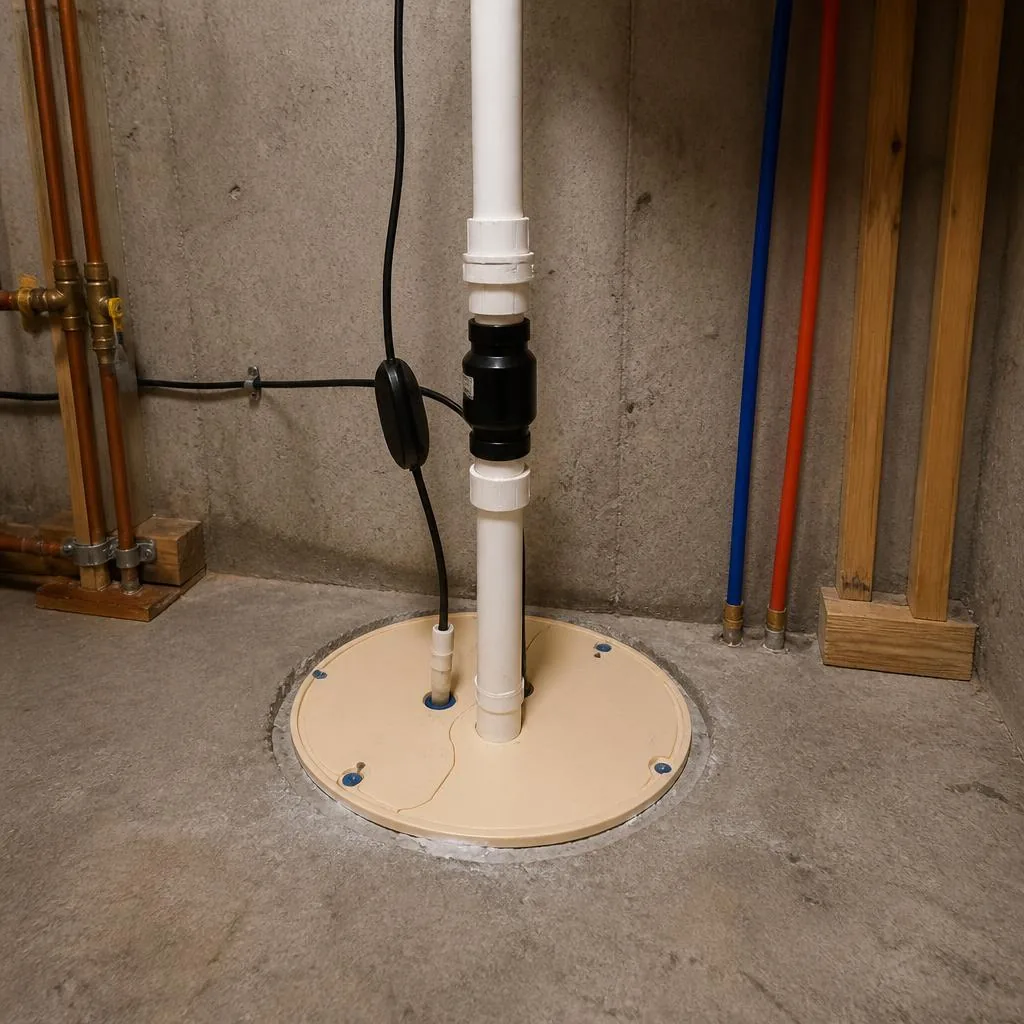
- Recurring backups where a basement floor drain is the relief point and there is no backwater valve. Adding one puts the overflow in the street instead of the basement.
- Sewer gas odor in the basement, which means a break or a dry trap.
Frequently Asked Questions
How long after cabling do roots come back? Usually 12 to 24 months, sometimes less on an aggressive line with multiple open joints. Cutting removes the mass inside the pipe but leaves the root outside and the opening it came through, so regrowth begins right away.
Does copper sulfate or a store bought root killer work? Poorly. Crystals dumped in a toilet settle in the invert and mostly wash away before they reach the roots at the crown of the pipe. A professional foaming product fills the full diameter and holds contact time, which is the entire mechanism. Chemicals of any kind do nothing for a structurally broken pipe.
Will I have to remove the tree? Usually not. Fixing the pipe is what stops the intrusion, because the root only entered where the pipe was already open. Removing a mature tree is expensive, changes the yard permanently, and does not repair a cracked hub joint.
For chronic root intrusion in a sound line, our [Hydro Jetting](https://arosoplumbinglawrence.site/services/hydro-jetting) service scours the pipe wall clean and clears the mass out to the main rather than punching a hole through it.
More guides
[Cast Iron Drain Stacks in Merrimack Valley Three Deckers and How to Tell When One Is Failing
Cast iron drain stacks in three deckers rarely fail all at once. They thin from the inside, weep at …](https://arosoplumbinglawrence.site/blog/cast-iron-drain-stacks-in-merrimack-valley-three-deckers-and-how-to-tell-when-one-is-failing) [Galvanized Supply Pipe: Why Water Pressure Drops in a 100 Year Old House
Galvanized steel supply pipe rusts closed from the inside over 50 to 70 years. The pressure at the s…](https://arosoplumbinglawrence.site/blog/galvanized-supply-pipe-why-water-pressure-drops-in-a-100-year-old-house) [Lead Service Lines in Older Massachusetts Cities and How Replacement Actually Works
A lead service line is the pipe running from the water main in the street to the meter in your basem…](https://arosoplumbinglawrence.site/blog/lead-service-lines-in-older-massachusetts-cities-and-how-replacement-actually-works)