What a Cast Iron Stack Actually Is
The soil stack is the vertical drain line that carries waste from every bathroom and kitchen in the building down to the sewer lateral under the basement floor. Above the highest fixture it continues through the roof as the vent stack, which is what lets air into the system so traps do not siphon dry.
In housing built between the 1880s and the 1920s, that stack is cast iron assembled with hub and spigot joints. The plain end, the spigot, drops into the flared end, the hub. The gap is packed with oakum, then sealed with molten lead poured in and caulked tight. Plenty of those joints are still holding after 110 years, but every one is a place where moisture sits against iron.
Branch lines tie in through sanitary tees and long sweep fittings. Toilets connect at a closet flange, often cast iron itself, leaded into the bend below. In a three decker, three kitchens and three bathrooms stack vertically and all discharge into the same 4 inch pipe.
The Mechanism: Why Cast Iron Rots From the Inside
Cast iron does not fail from the outside in. It fails from the inside out, and it fails unevenly.
The inside of a drain carries a thin film of waste water and, critically, air. In the crown of the pipe, the top half where sewer gases sit, hydrogen sulfide from decomposing waste converts to sulfuric acid on the wet pipe wall. That acid eats iron. The bottom of the pipe, constantly rinsed by flow, often stays in better shape than the top. Cut open a 90 year old horizontal line and you often find the invert intact and the crown thinned enough to push a screwdriver through.
On the vertical stack, waste falls fast and cleanly, so the sidewalls hold up longer. The damage concentrates at three places:
- The hub joints, where the lead and oakum shrink over decades, letting moisture wick into the seam and rust the iron from the joint outward.
- The base of the stack, where the vertical run turns horizontal through a long sweep. Flow slows there, solids settle, and the pipe sits in a permanently damp environment.
- The rot line, the band of pipe where the stack passes through the concrete basement floor. Concrete holds moisture. Old floors were poured over cinder fill and ash, which are acidic. The iron corrodes from the outside at the same time it corrodes from the inside, and the two meet.
That rot line is the single most common cast iron failure I see in Lawrence and the surrounding Merrimack Valley mill neighborhoods. The pipe looks fine at eye level and is paper thin 6 inches off the floor.
How to Diagnose a Failing Stack
You can learn a lot in 20 minutes with a flashlight, a screwdriver, and a small hammer.
- Tap test. Healthy cast iron rings. Sound the stack from the ceiling down to the floor with a small hammer or the handle of a screwdriver. A dull thud means the wall has lost thickness or is packed with scale behind it.
- Scrape test. Scrape a suspect area lightly. Sound iron gives up a little surface rust. Failing iron gives up graphite gray flakes that crumble between your fingers. That is graphitic corrosion, where the iron has leached out and left the carbon matrix behind. It looks like pipe and has almost no strength.
- Look at the floor line. Any rust staining, efflorescence, or damp ring in the concrete around the stack base is a signal. So is a stack that has visibly settled, which happens when the base rots and the weight above drops.
- Watch the joints. Rust colored streaks or bulging, flaking iron at a hub means the joint is weeping. On a stack, a weeping joint is usually a slow drip that shows up as a stain on a ceiling one floor below, often mistaken for a bathtub leak.
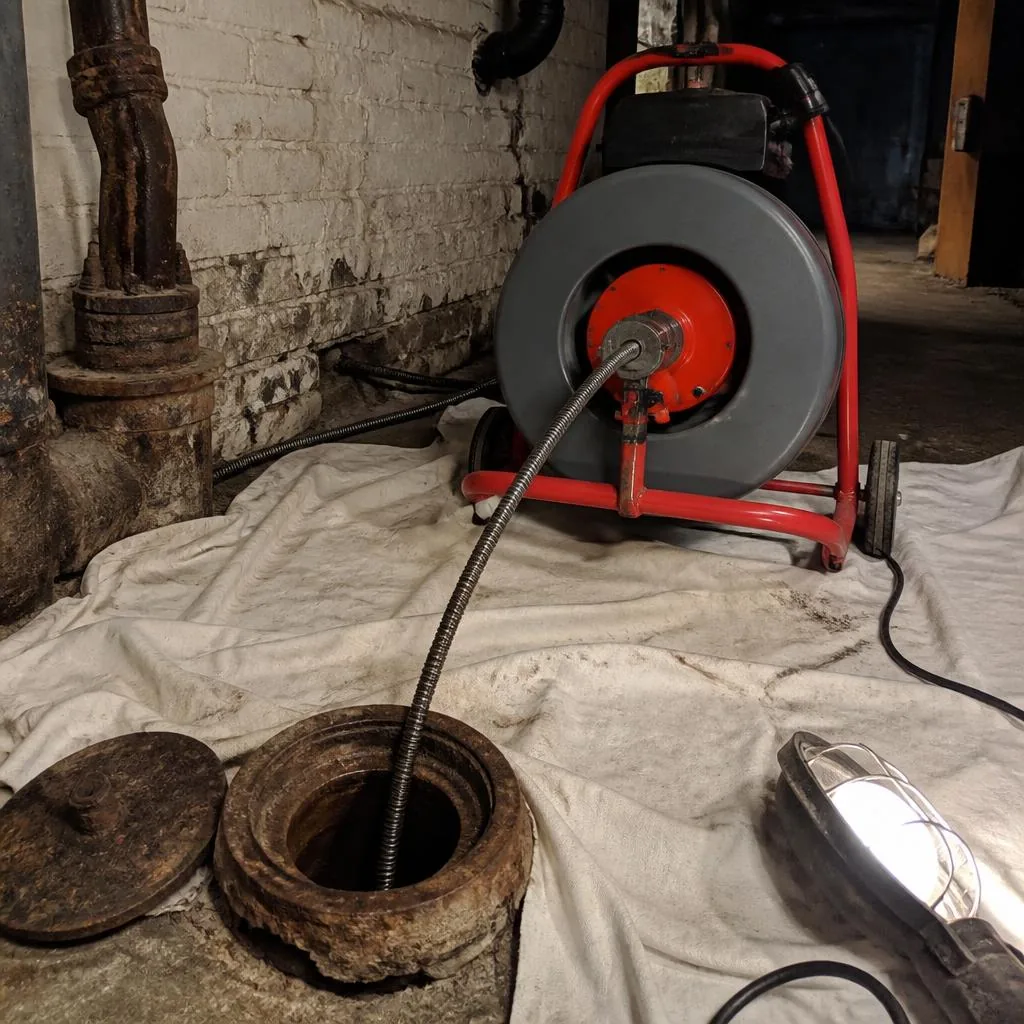
- Chronic slow drains with no clog. Heavy internal scale reduces a 4 inch stack to an effective 2 inch waterway. Cabling clears whatever soft blockage exists and it backs up again in 3 weeks. If a sectional cable machine keeps finding nothing but the drain keeps slowing, the pipe itself is the problem.
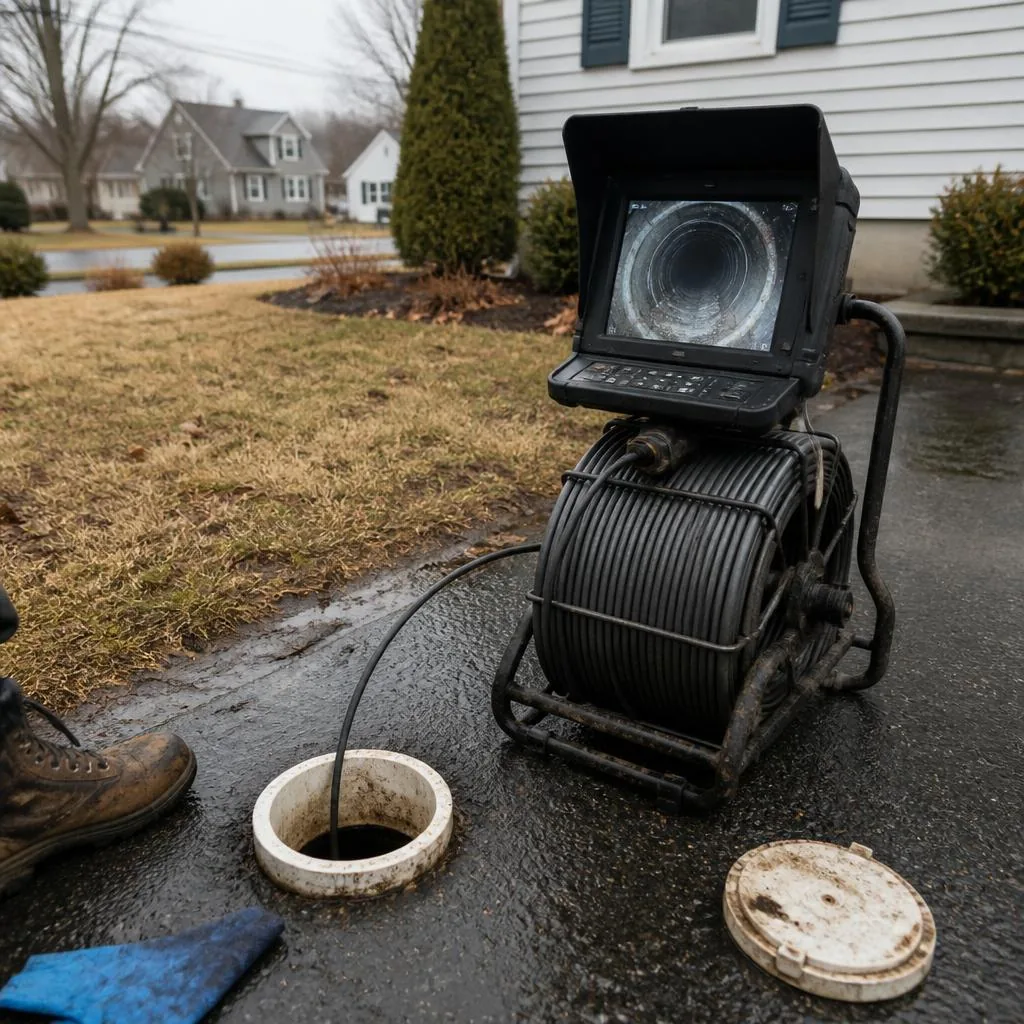
- Camera it. A camera inspection run from a cleanout shows scale thickness, cracks, and holes directly. It is the only way to separate a pipe that needs cleaning from a pipe that needs replacing, and it is worth the cost before anyone opens a wall.
A misdiagnosis I see constantly: a third floor tenant reports a slow tub, the landlord pays for three cleanings in a year, and the real issue is a partially collapsed stack base two floors down choking the whole column.
What to Do About It, and When It Becomes Urgent
Not every aging stack needs immediate replacement. Sequence it.
Cleaning and clearing buys time when the pipe still has wall thickness. Hydro jetting scours scale off cast iron walls far better than a cable does, and on a stack with intact metal it can restore most of the original waterway. It is the wrong tool on a pipe that is already thin, because pressure will find the weak spot.
Sectional repair works when failure is localized. The rotted section gets cut out with a snap cutter and replaced with new cast iron or PVC joined by shielded no hub couplings. Replacing the bottom 3 to 4 feet of a stack plus the horizontal run to the lateral is a common, contained job in a three decker basement.
Full stack replacement is the answer when the camera shows failure at multiple levels. In a three decker this means opening chases behind bathrooms on all floors, which is why it is usually scheduled between tenancies. Modern replacement is PVC or no hub cast iron. Cast iron costs more and is heavier, but it is quieter, which matters when the stack runs behind a bedroom wall in a multifamily.
Treat it as urgent when any of these are true:
- Sewage or gray water is actively escaping into a basement, wall cavity, or ceiling. That is a biohazard and it starts damaging framing immediately.
- You smell sewer gas in living space. A cracked stack or a broken vent lets sewer gas into the building, and hydrogen sulfide and methane are health and combustion risks, not just odor.
- The stack base has settled or the pipe moves when pushed. A stack that loses support at the bottom can drop and shear branch connections on upper floors.
- Water is tracking down inside a wall. Wet framing in an old wood frame building means rot and mold within days in a Massachusetts summer.
Water that has been leaking behind plaster for months is a second job on top of the pipe work, involving drying, demolition of saturated material, and remediation of what grew in the cavity. Catching a weeping hub before it soaks a bay of framing is the difference between a contained repair and a gut.
Frequently Asked Questions
How long does a cast iron drain stack last? Plan on 70 to 100 years, and treat anything past 80 as a candidate for inspection rather than assumption. Water quality, how much the building is used, and whether the stack passes through damp concrete all move that number. Vertical sections routinely outlast horizontal ones by decades.
Can I replace just part of a cast iron stack, or does the whole thing have to go? Partial replacement is standard practice and works well when a camera confirms the rest of the pipe still has wall thickness. The bottom 3 to 4 feet at the floor line is the most commonly replaced section. New pipe ties into old with shielded no hub couplings, and the work still requires a permit and inspection.
Does drain cleaning damage old cast iron? Proper cabling does not damage sound cast iron, but aggressive jetting on a pipe already thinned by graphitic corrosion can blow through it. That is why a camera inspection should come before high pressure work on any stack older than 70 years.
If the stack in your building is showing these signs, Aroso Plumbing Lawrence can start by [clearing a slow or backed up stack before deciding whether the pipe itself needs replacing](https://arosoplumbinglawrence.site/services/drain-cleaning), and is available 24 hours a day if a stack lets go.
More guides
[Galvanized Supply Pipe: Why Water Pressure Drops in a 100 Year Old House
Galvanized steel supply pipe rusts closed from the inside over 50 to 70 years. The pressure at the s…](https://arosoplumbinglawrence.site/blog/galvanized-supply-pipe-why-water-pressure-drops-in-a-100-year-old-house) [Lead Service Lines in Older Massachusetts Cities and How Replacement Actually Works
A lead service line is the pipe running from the water main in the street to the meter in your basem…](https://arosoplumbinglawrence.site/blog/lead-service-lines-in-older-massachusetts-cities-and-how-replacement-actually-works) [Why the Massachusetts Plumbing Code Is Stricter Than Most People Expect
Massachusetts writes its own plumbing code instead of adopting a national model, and it is more rest…](https://arosoplumbinglawrence.site/blog/why-the-massachusetts-plumbing-code-is-stricter-than-most-people-expect)