
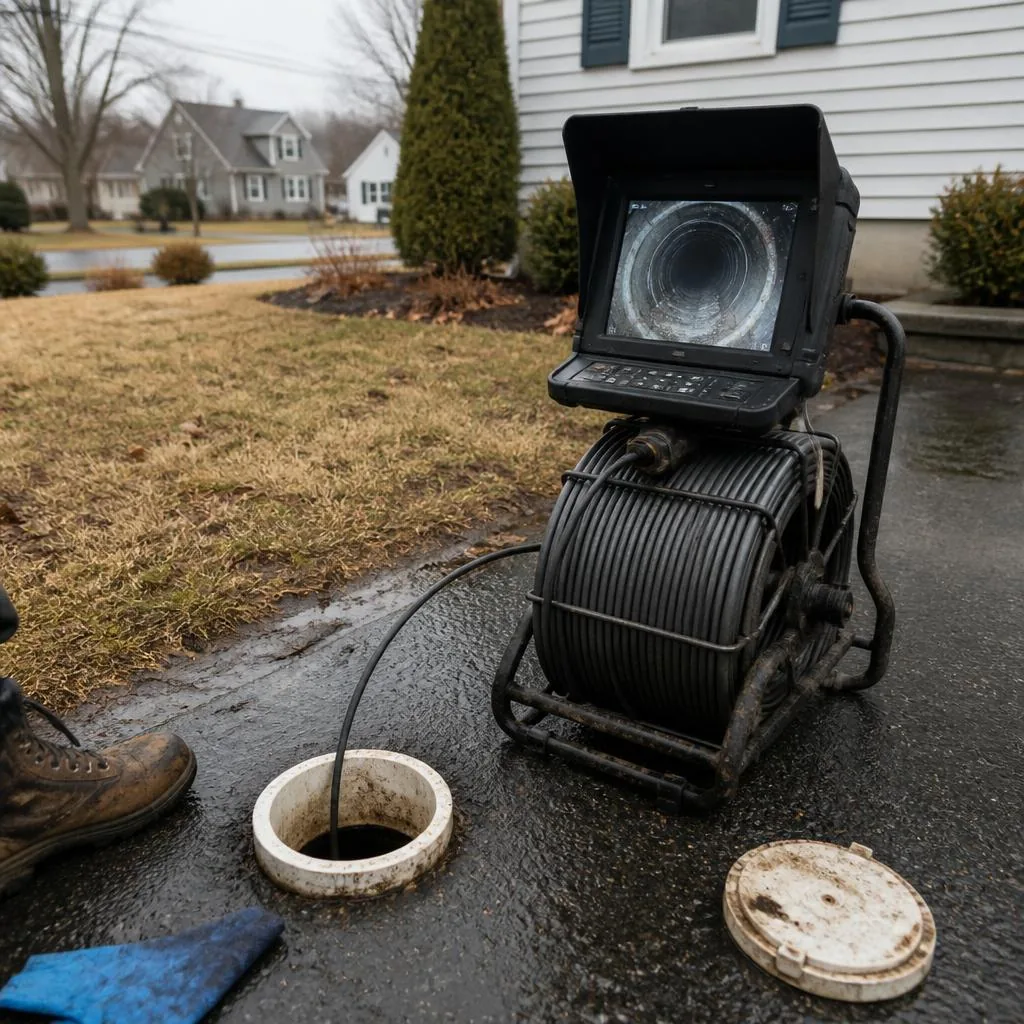
Aroso Plumbing Lawrence finds leaks without demolishing the house first. The work is a sequence, not a single tool. We start at the water meter with every fixture off and watch the low flow indicator, because a meter that keeps creeping proves the leak is on the supply side and gives us a rough idea of volume. Then we isolate: close the main, close individual branch valves and the water heater cold inlet, and pressurize sections one at a time with a gauge to see which section will not hold. Static pressure is recorded, since high street pressure or a failed pressure reducing valve is a cause as often as it is a symptom. From there it is acoustic listening on the isolated line, thermal comparison on a slab or floor, and tracing to the point where we can mark an access opening 1 or 2 feet across instead of a wall.
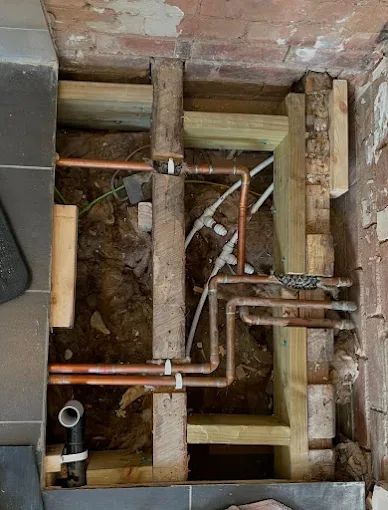
Lawrence housing stock makes hidden leaks common and hard to reach. Late 1800s to 1920s three deckers and two families have supply piping that has been added to for a century: original galvanized steel that closes with rust and pits through from the inside, copper from the 1950s onward, and PEX and CPVC from more recent work, all spliced together. Copper in this water develops pinholes, usually on horizontal runs and often where a line was scraped, kinked or run against a joist. Unheated basements, crawl spaces and closed off second floor apartments give split lines in January and February that then leak slowly all spring. Low lying blocks near the Spicket and in South Lawrence take groundwater in the basement anyway, so a real leak gets blamed on the water table for months. In a three decker, water from a second floor supply line will show on the first floor ceiling several feet from where it actually escaped.
Leak repair, as opposed to detection, is permitted work in most cases. Under 248 CMR 10.00, replacing or rerouting water piping, changing a water service line and repiping a section are inspected by the City of Lawrence Inspectional Services Department, typically with a rough inspection while the pipe is exposed and a final once it is closed up. That inspection is the reason we open the wall in the right place and leave it open until the inspector sees it. Water service line work also intersects with the Lawrence Water and Sewer Department and the ongoing effort with MassDEP to identify and replace lead and lead jointed service lines, so if we find a leaking service of that material the replacement conversation is a different one. Gas is separate entirely: gas fitting requires a gas fitting license and falls under the Massachusetts Fuel Gas Code, permitted on its own.
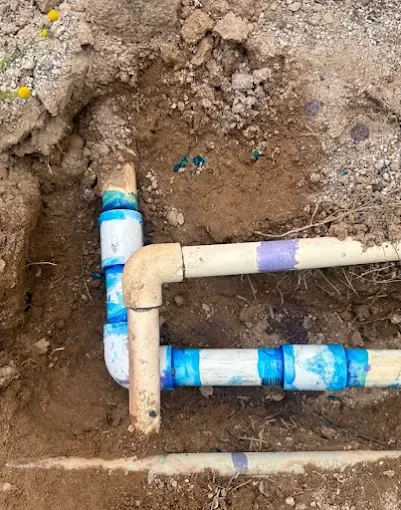
Field realities decide these jobs. The wet spot is almost never above the leak, because water runs along the top of a joist, follows a wire or a pipe, and drops at the first low point. Slab leaks in Lawrence are less common than in newer construction because so much of the housing has basements, so a suspected slab leak in a three decker is more often a leak in the floor structure above, a shower pan, or a failed toilet flange seal that only wets when the fixture is used. That last one is a classic misdiagnosis: a leak that appears only after a shower or a flush is a drain or fixture leak, not a supply leak, because supply leaks run constantly. Irrigation lines are another trap. They leak underground with no interior symptom at all and often show up only as a spike on the bill or a green patch in a dry August lawn, and they need the backflow assembly checked at the same time. If we ever smell or measure gas, we shut the appliance or the line down and hand it to the gas utility, Eversource, and a licensed gas fitter, because that is not a wait and see situation.
Technician insight
The first question I ask on the phone is whether the water shows up all the time or only after somebody uses a fixture, because that one answer sorts supply from drain before I load the van. On the older three deckers I like to listen in the early morning before the building wakes up, since a refrigerator ice maker filling two floors up sounds a lot like a pinhole through a plaster wall. And when I find pitting on one horizontal copper run, I check the other horizontals in the same basement, because copper that failed from the inside rarely fails in only one place.
A summer water bill with nothing wet inside
A homeowner on a corner lot called after two months of water bills that had roughly doubled with no change in the household and nothing wet anywhere in the house. With every fixture shut off, the low flow indicator at the meter was still turning, which put the loss on the supply side. Isolating the house at the main stopped the movement, so the loss was inside the property but past the meter, and the interior sections all held pressure. That pointed outside to the irrigation zone valves, where a cracked fitting was running into gravel and never surfacing except as one stubbornly green strip of lawn in August. We repaired the fitting and tested the backflow assembly while the system was open.
Leak Detection Services We Offer
Slab and Under Floor Leak Location
Pinpointing supply leaks under concrete slabs, basement floors and floor structures using pressure isolation, acoustic listening and thermal comparison, so the opening is small and in the right place.
Pinhole Leaks in Copper
Locating and repairing the small perforations that develop in copper supply lines, and assessing whether the run is failing in one spot or is due for replacement based on pitting and water chemistry.
Hidden Wall Leaks
Tracing leaks inside finished walls and ceilings, including leaks that surface several feet from their source, with moisture mapping before any drywall or plaster comes out.
Water Meter and Pressure Testing
Meter observation with fixtures off, static and flowing pressure readings, and section by section pressure isolation to prove which part of the system is losing water.
Gas Leak Referral and Shutoff
Immediate shutoff and ventilation if gas is detected, then referral to Eversource and a licensed gas fitter, since gas work requires a separate gas fitting license under the Massachusetts Fuel Gas Code.
Irrigation and Outdoor Line Leaks
Finding leaks in buried irrigation lines, exterior hose bibbs, frost free sillcocks and outdoor supply runs that show on the bill long before they show on the lawn, including a check of the backflow assembly.
How it works
Meter and pressure baseline
Every fixture off, meter watched for movement, static pressure recorded, and the system checked for a failing pressure reducing valve or thermal expansion problem.
Isolate by section
Branch valves, the water heater inlet and fixture stops are closed in sequence and each section is pressurized and held, narrowing the leak to one run.
Pinpoint
Acoustic listening, thermal comparison and moisture mapping locate the leak within a small area, which we mark before anything is opened.
Open, repair and verify
A minimal access opening, the repair, a pressure test to confirm it holds, and a permit and inspection through the City of Lawrence Inspectional Services Department where the repair requires one.
Pricing
Leak detection is priced by the time and equipment it takes to find the leak, and by how accessible the suspected area is. A straightforward supply leak in an open basement, found with pressure isolation and listening, is usually a few hundred dollars for the location work, often in the 250 to 500 range. Slab and under floor work, buried irrigation lines and leaks in a finished three decker with plaster walls and multiple units cost more because the isolation takes longer and access is harder. The repair is separate and depends entirely on what we find: a single pinhole in accessible copper is a small job, while a run of galvanized that is pitting through in several places is a repipe conversation. Permit fees apply where the repair is permitted work. We give you the detection cost up front and the repair cost after we know what is behind the wall, because quoting a repair before finding the leak is guessing.
Leak Detection — FAQs